
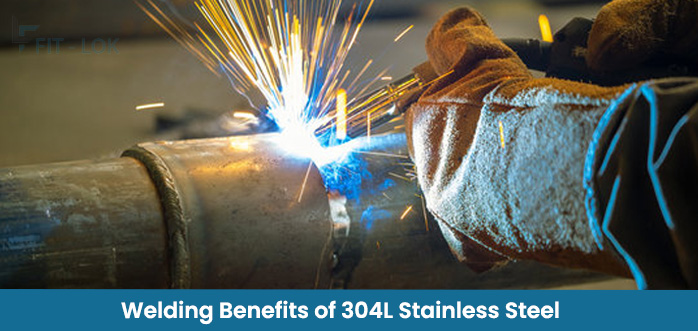
Why use 304L Stainless Steel for welding application?
304L SS contains lower carbon content compare to its couterpart AISI 304 material. This lower carbon content prevents carbide precipitation and eliminates the risk of intergranular corrosion in the heat affected zone. Due to this it does not require post weld annealing which makes it ideal for heavy welding applications.
Is SS 304L Easy to Weld?
Yes, 304L SS is very easy to weld due to its lower carbon content. It reduces sensitization and does not required Post Weld Heat Treatment.
Filler metal for TIG welding AISI 304L
For Tig welding of AISI 304L material, ER304L or ER308L filler rod is best. Both of these helps to prevent carbide precipitation and ensures excellent corrosion resistance.
What are the limitation of SS 304L welding?
For general applications 304l stainless steel is best choice but if conditions changes like marine environments or high heat applications then there are risk of safety, premature failure and continuous replacements.
How 304L SS Tubes Reduce Weld Cracking?
Low carbon content in Stainless Steel 304L Tube helps to prevent chromium carbide precipitation and does not allow to form a carbides depletes around chromium, which makes heat affected zone susceptible to weld corrosion cracking. Composition of 304L SS makes it more resistant to different types of cracking.
Is 304L stainless steel magnetic?
No, 304L stainless steel is non magnetic in annealed condition.
Does 304L Stainless Steel Require Post Weld Heat Treatment?
No, Alloy 304L material does not require post weld heat treatment due to its carbon content which helps in preventing sensitization. The ability of skip PWHT makes it ideal choice for applications where heavy welding is required.
Why ASTM A213 TP304L Are Ideal for Pharmaceutical Welding Applications?
ASTM A213 TP304L Tubes provides exceptional weldability without the risk of intergranular corrosion and also helps to maintain the purity and smoothness of surface which makes it ideal choice for pharmaceutical welding applications.