
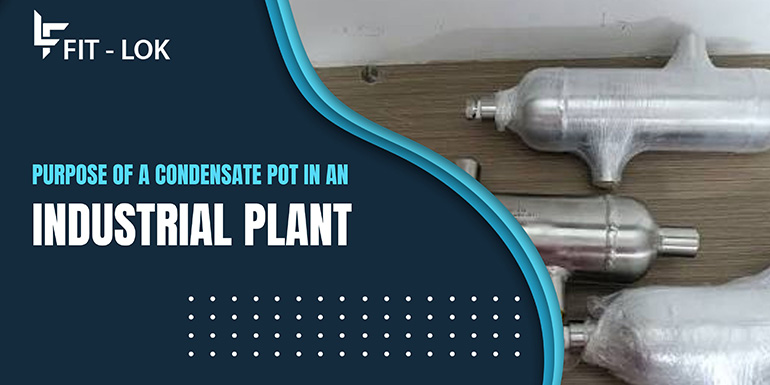
What Is a Condensate Pot?
A condensate pot is a cylindrical vessel designed to accumulate and hold liquid condensate from fuel or steam lines. It allows a small volume of steam to condense into water, and that water forms a protective liquid seal between the hot process fluid and the sensitive measuring element of the instrument. This seal keeps hot steam and high pressure away from delicate measuring tools like pressure transmitters.
Condensate pot provide increased accuracy in the flow measurement
How Does a Condensate Pot Work?
- Steam flows from the main process line toward the pressure tapping point.
- It enters the condensate pot or coiled pigtail, where the increased surface area and lower local temperature cause it to lose heat.
- The steam condenses into water inside the pot.
- This condensate accumulates and fills the pot and the downstream impulse tubing connected to the gauge or transmitter.
- The instrument now senses pressure through this stable water column rather than through direct steam contact.
- Excess steam continues to condense as needed, continuously topping up the seal, while excess/older condensate is displaced back toward the process or drained periodically depending on design.
Refer working mechanism of Condensate Pots
Core Purpose of a Condensate Pot
Protecting the Instrument from High Temperature
Steam can be much hotter than the temperature that a pressure gauge or transmitter can safely handle. If hot steam reaches the sensing element directly, it can damage the diaphragm/Bourdon tube and cause calibration drift. Here, condensate pot acts like a heat shield.
Creating a Stable Water Seal
When hot steam enters the condensate pot, it cools and turns into water. This water stays in the impulse line and creates a water seal between the steam line and the instrument.
Improving Measurement Stability
The condensate pot helps the gauge or transmitter give a steadier and more stable reading, instead of continuously jumping with the steam conditions.
Increasing Instrument Life and Reducing Maintenance
Continuous exposure to high temperature is one of the common reasons for premature instrument failure. A properly installed condensate pot reduces thermal stress on the instrument and protects its sensing components.
Pot Type Condensate Pot is used to collect and manage condensate
Different Types of Condensate Pots
| Type of Condensate Pot | Description |
|---|---|
| Standard Condensate Pot | A simple chamber that collects condensed liquid from a steam/vapor line. |
| Instrument Condensate Pot | Provides a stable condensate column and protects instrumentation from direct steam exposure. |
| Equalizing Condensate Pot | Two matched pots maintain similar condensate conditions on both sides of a DP instrument. |
| Single Condensate Pot | One pot is provided for a single impulse line or measurement connection. |
| Dual Condensate Pot | A matched pair of condensate pots is used for high and low pressure impulse lines. |
| Vertical Condensate Pot | Installed vertically, allowing condensate to collect at the bottom. |
| Horizontal Condensate Pot | Installed horizontally to suit piping and space constraints. |
| Drainable Condensate Pot | Includes a drain valve, steam trap, or other arrangement for removing accumulated condensate. |
Condensate pots are widely used in steam based industrial systems
How to select right Condensate Pot
When selecting a condensate pot for a steam service, the main objective is to maintain a stable condensate seal and protect the connected instrumentation from direct exposure to high temperature steam.
| Process pressure and temperature rating | Must exceed maximum line conditions with adequate safety margin |
|---|---|
| Material of construction | Carbon steel, stainless steel (304/316), or alloy steel depending on process fluid and code requirements |
| Connection type and size | Threaded (NPT/BSP), Socket weld, or flanged, matched to the instrument and process line |
| Volume/capacity | Larger pots offer a bigger condensate reservoir and longer protection during upset conditions |
| Orientation | Vertical or horizontal mounting, based on available space and drainage requirements |
| Applicable codes and standards | ASME B31.1 / B31.3, ASME B40.100 for gauge accessories, and plant specific instrument specifications |
Condensate Systems is designed to drain out foreign material from the pipeline
Common Problems and Their Causes Condensing pot
| Symptom | Likely Cause |
|---|---|
| Instrument reading drifts or fluctuates erratically | Pot has boiled dry or lost its condensate seal, exposing the instrument to direct steam |
| Gauge/transmitter fails prematurely | Pot undersized, incorrectly oriented, or omitted entirely during installation |
| Steam flow measurement is inaccurate | Unequal condensate levels between twin pots on a DP transmitter's high and low legs |
| External corrosion or leaks | Incorrect material selection for the ambient/process environment, or loose fittings |
Application of Condensate Pots
- Boiler drums and steam headers
- Chemical and Processing Plants
- Turbine inlet
- Process heat exchangers
- Feedwater heaters
- Petrochemical Plants
FAQs
Can a condensate pot be used on non steam services?
Yes, but only if the condensate pot is suitable for the actual non steam service.
What happens if a condensate pot is not used on a steam gauge?
The instrument’s sensing element is exposed directly to steam temperature, which can quickly exceed its rated limit, leading to inaccurate readings, warped internals, and early failure.
Is a condensate pot the same as a syphon?
No, A condensate pot and a siphon are different components, although both can protect pressure instruments from hot steam.